An Overview of Spices Export from India
A guide to Indian spices export: Key spices, main markets, and growth trends.
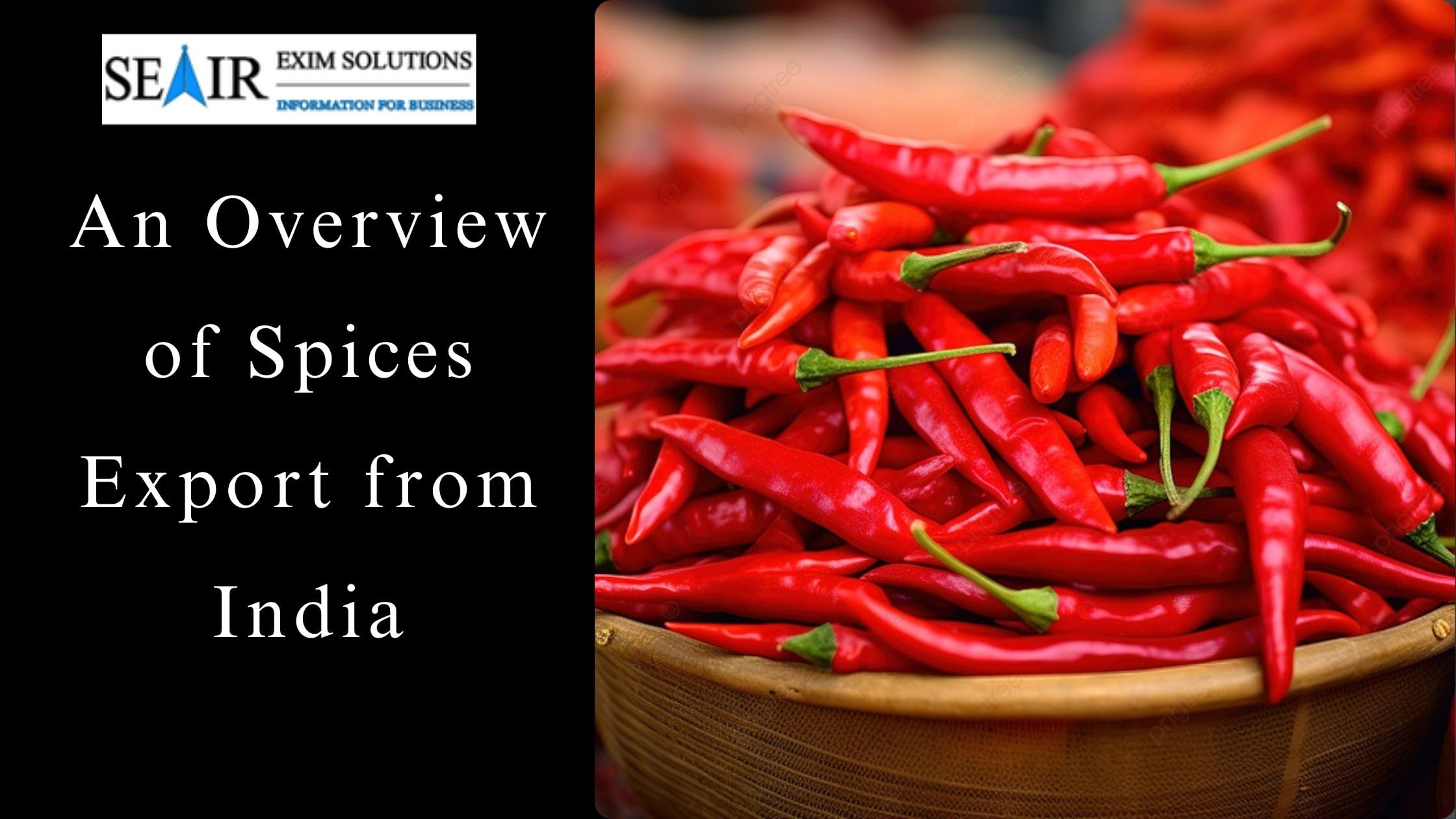
Indian spices export have positioned the country as a prominent player in the global spice market. With a heritage that dates back to ancient trade routes, Indian spices continue to captivate taste buds and culinary imaginations worldwide. This comprehensive overview delves into the essence of Spices Export from India, highlighting the diverse range of spices, key markets, and growth opportunities that underscore India's leadership in the spice trade.
India's favourable climatic conditions and rich soil contribute to the cultivation of a wide variety of spices. The country is renowned for producing high-quality spices such as turmeric, black pepper, cardamom, cumin, coriander, and ginger. These spices not only enhance flavours but also carry significant health benefits, further increasing their demand in the global market. The unique aroma, vibrant colours, and distinctive tastes of Indian spices have made them indispensable in kitchens and food industries worldwide.
Leading Companies: The Top 10 Spices Exporters in India
The Indian spice export landscape is marked by several key players who have established themselves as leaders in the industry. These top 10 spices exporters in India are renowned for their commitment to quality, consistency, and adherence to international standards. Their extensive distribution networks and strategic partnerships enable them to cater to global markets efficiently and effectively. Here are some of the leading companies driving India's spice export success:
1. Everest Spices
Known for its extensive range of spice blends and masalas, Everest Spices is a household name in India and has made significant strides in the export market.
2. MDH Spices
With a rich legacy spanning decades, MDH Spices is synonymous with quality spices and has an extensive international market presence.
3. Eastern Condiments
Specializing in a wide array of spices and mixes, Eastern Condiments has successfully tapped into markets across Asia, the Middle East, and beyond.
4. Patanjali Ayurved
Combining traditional wisdom with modern production techniques, Patanjali has gained prominence in the spice export sector.
5. ITC Limited
Known for its agricultural and food products, ITC Limited has a strong foothold in the export of high-quality spices.
6. DS Group (Catch Spices)
Catch Spices, a brand under the DS Group, has become a preferred choice for consumers looking for premium spices.
7. Badshah Masala
With a focus on authenticity and flavour, Badshah Masala has carved a niche for itself in the global spice market.
8. Synthite Industries
A leading exporter of value-added spice products such as oleoresins and essential oils, Synthite Industries is a key player in the sector.
9. Jayanti Herbs & Spice
Known for its organic and sustainable spice products, Jayanti Herbs & Spice has a strong international presence.
10. VeeTee Group
VeeTee Group's commitment to quality and extensive distribution network make it a significant contributor to India's spice exports.
Unveiling the Magnitude of Indian Spices Export
India’s spice export industry is a cornerstone of the country's economy, contributing significantly to foreign exchange earnings and employment generation. The magnitude of Indian spices export can be gauged by the fact that India supplies spices to over 180 countries worldwide. The Indian Spices Board, under the Ministry of Commerce and Industry, plays a crucial role in promoting and regulating spice exports, ensuring that the industry adheres to international standards and quality benchmarks.
Indian spices are not just commodities but cultural ambassadors that convey the richness of Indian heritage and culinary diversity. Spices like saffron, nutmeg, and cloves, in addition to the more commonly known spices, are in high demand in international markets. India's extensive network of spice farmers, processors, and exporters works in unison to meet global demands while maintaining the integrity and authenticity of their products.
Analyzing Indian Spices Export Data for Insights
Examining Indian spices export data provides valuable insights into market trends, growth patterns, and emerging opportunities. The data reveals that the United States, Vietnam, China, the United Arab Emirates, and the United Kingdom are some of the major importers of Indian spices. The growing popularity of Indian cuisine, the increasing awareness of the health benefits of spices, and the rising demand for natural and organic food products are driving the growth of Indian spice exports.
According to recent statistics, the total export of spices from India has been on a steady rise, both in terms of volume and value. For instance, during a recent fiscal year, India exported over 1.4 million tons of spices, valued at approximately USD 3.6 billion. This robust growth is a testament to the increasing global preference for Indian spices and the efforts of Indian exporters to adhere to stringent quality standards.
Moreover, the government’s initiatives to support spice growers and exporters through schemes such as the 'Integrated Scheme for Export Promotion & Quality Improvement in Spices' have contributed to the sector's growth. By leveraging data analytics and market intelligence, stakeholders in the spice industry can identify new markets, optimize supply chains, and enhance their competitive edge.
Understanding Spices HS Code: Classification and Significance
The Harmonized System (HS) code is an internationally standardized system of names and numbers used to classify traded products. Understanding the spices hs code is crucial for exporters and importers as it ensures uniformity and consistency in the tariff and statistical data collection. Each spice has a unique HS code that reflects its botanical and commercial characteristics.
For instance, turmeric is classified under HS code 091030, while black pepper falls under HS code 090411. These codes help in monitoring trade statistics, enforcing import regulations, and applying trade policies. Exporters must correctly classify their products using the appropriate HS code to comply with international trade regulations and avoid any potential trade disputes.
The spices HS code system also facilitates the identification of market trends and the comparison of trade data across countries. By understanding and utilizing the HS code system, Indian spice exporters can streamline their export processes, ensure compliance with global trade standards, and effectively navigate the complexities of international trade.
Conclusion
In conclusion, India's prominent position in the global spice market is a testament to its rich heritage, favourable climatic conditions, and diverse range of high-quality spices such as turmeric, black pepper, and cardamom. Leading companies like Everest Spices and MDH Spices, along with government initiatives and support from the Indian Spices Board, have significantly contributed to this success. The extensive reach of Indian spices, supplying over 180 countries, highlights their universal appeal, driven by unique flavours and health benefits. By leveraging data analytics and adhering to international standards, Indian spice exporters continue to expand their global footprint, ensuring the industry's robust growth and ongoing contribution to the economy. However, if you need spices export data or global trade data, take advantage of import and export data provider platforms like Seair Exim Solutions or Eximpedia.
Frequently Asked Questions (FAQs)
Q1. What factors contribute to India's success in the global spice market?
India's success in the global spice market is attributed to its rich heritage, favourable climatic conditions, and the cultivation of a diverse range of high-quality spices such as turmeric, black pepper, and cardamom.
Q2. Which companies are leading the spice export industry in India?
Leading companies in the Indian spice export industry include Everest Spices, MDH Spices, Eastern Condiments, Patanjali Ayurved, and ITC Limited, among others.
Q3. How does the Indian Spices Board support the spice export industry?
The Indian Spices Board promotes and regulates spice exports by ensuring adherence to international standards, providing market intelligence, and supporting spice growers and exporters through various initiatives and schemes.
Q4. What are the major markets for Indian spices?
Major markets for Indian spices include the United States, Vietnam, China, the United Arab Emirates, and the United Kingdom, reflecting the universal appeal of Indian spices.
Q5. How do Indian spice exporters maintain quality and compliance with international standards?
Indian spice exporters maintain quality and compliance with international standards by leveraging data analytics, adhering to the Harmonized System (HS) code for classification, and following stringent quality control measures.
Q6. What role do government initiatives play in the growth of India's spice export industry?
Government initiatives, such as the 'Integrated Scheme for Export Promotion & Quality Improvement in Spices,' play a crucial role in supporting spice growers and exporters, contributing to the industry's growth and enhancing India's competitive edge in the global market.
About the author
Seair Exim Solutions is a leading market research and Import Export Data Provider in India. We offer importer and exporter information for over 100+ nations, including India, the United States, kazakhstan, turkey, Vietnam, Indonesia, Russia, Ethiopia, and many others. Seair Exim Solutions offers Global Trade Data, Export Import Data, India Import Export Data, and World Trade Data to assist businesses in growing their global operations. Seair Exim Solutions provides a customized dashboard for international importers and exporters.
Comments
Join the discussionNo comments yet. Be the first to comment.